
Why Ahmedabad?
India’s first UNESCO World Heritage City is also one of its most trusted medical destinations — safe, well-connected, affordable and famously hospitable.
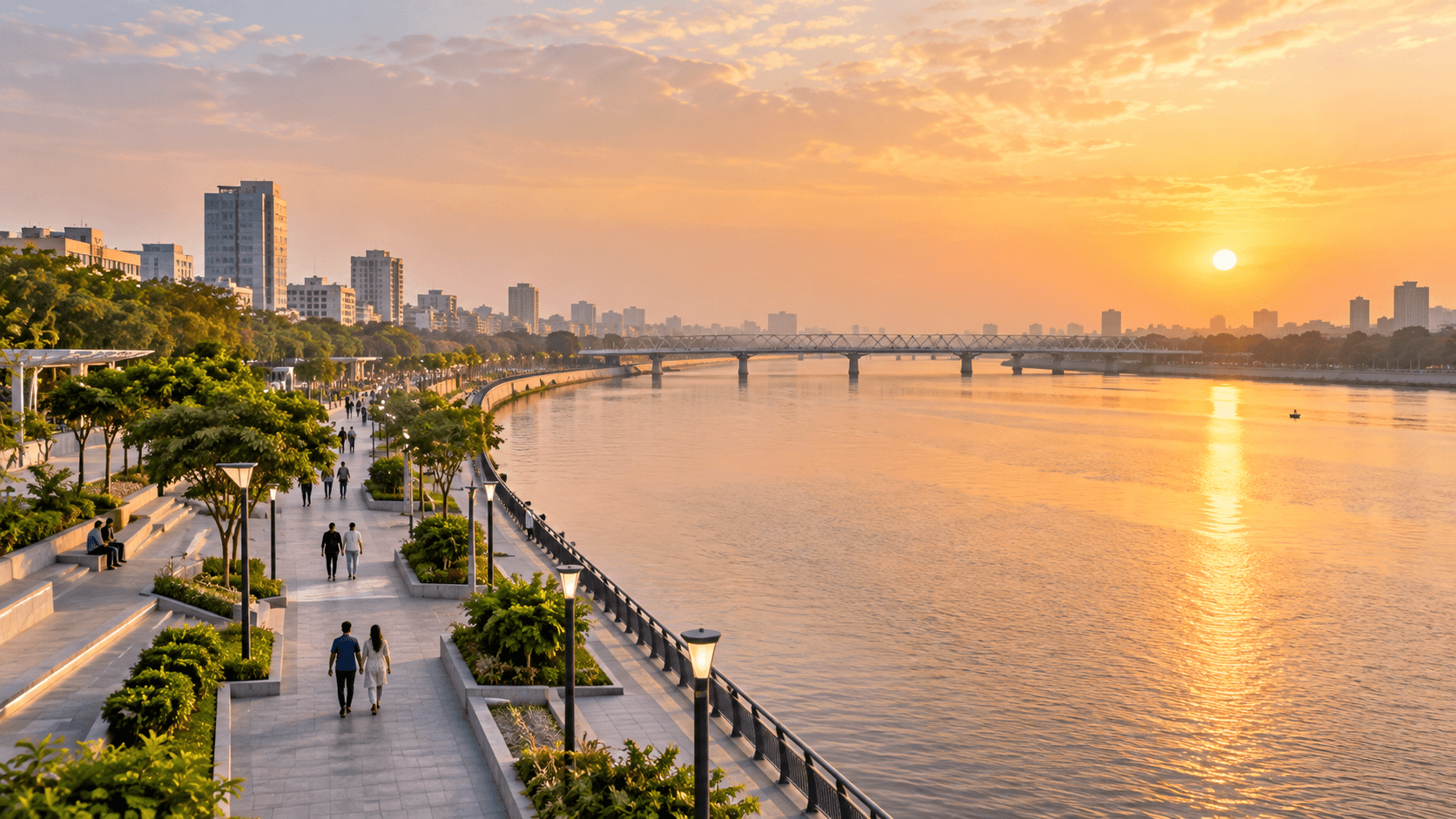
A city that heals, and welcomes.
Ahmedabad is the largest city in Gujarat, the home state of Mahatma Gandhi and one of India’s most prosperous and well-governed regions. With a population of over eight million, it combines the infrastructure of a major metro with a pace of life that is calmer than Mumbai or Delhi. It is consistently ranked among India’s safest large cities and its cleanest, and it was the first Indian city to be declared a UNESCO World Heritage City in 2017.
For a patient, that translates into practical advantages: a modern international airport 20 minutes from SAL Hospital with direct flights to the Gulf, Europe and Southeast Asia; reliable electricity and water; wide roads; a large English-speaking population; and a deeply rooted culture of hospitality — Gujaratis are known across India for treating guests as family.
Ahmedabad is also a healthcare hub in its own right. It hosts several of western India’s leading hospitals, medical colleges and research institutes, which means a deep pool of specialist talent, competitive costs and well-established clinical standards.
Ahmedabad by the numbers
8M+Metropolitan population
20 minAirport to SAL Hospital
1stUNESCO World Heritage City in India
300+Days of sunshine a year
Practical reasons patients choose Ahmedabad
Sardar Vallabhbhai Patel International Airport — direct flights from Dubai, Abu Dhabi, Doha, Muscat, Sharjah, London, Singapore and Bangkok
Among the safest major cities in India, with low crime rates and a strong civic culture
Vegetarian capital of India — ideal for patients on restricted or recovery diets, with halal and continental options widely available
Dry, warm climate for most of the year supports post-operative recovery
Costs 20–30% lower than Mumbai or Delhi for accommodation, food and local travel
Clean, well-planned neighbourhoods; SAL sits in Thaltej, one of the city’s most upscale areas
A large diaspora connection — thousands of NRIs return each year for treatment and family visits
English is widely spoken in hospitals, hotels, banks and shops
Getting here and getting around
While you recover, explore
Sabarmati Ashram — Gandhi’s home for 13 years, on the riverbank 15 minutes away
The Old City heritage walk through 600-year-old pols (gated neighbourhoods)
Sabarmati Riverfront — 11 km of landscaped promenade for gentle recovery walks
Adalaj Stepwell and Sun Temple at Modhera — day trips into Gujarat’s architectural past
Manek Chowk night food market — a gentle introduction to Gujarati cuisine
Rann of Kutch and Gir Forest (Asiatic lions) — for those who stay longer
Frequently asked questions
Yes. Ahmedabad is considered one of India’s safest large cities. Our SPOC meets you at the airport, handles all local transport, and is reachable 24×7. Most patients are surprised by how calm and organised the city feels.
Warm and dry for most of the year. October to March is the most pleasant (18–30°C). Summers (April–June) are hot; monsoon (July–September) brings moderate rain. Hospitals and hotels are fully air-conditioned.
Ahmedabad has excellent continental, Middle Eastern, Chinese and South Indian restaurants, and hotels cater to international guests. Halal and vegetarian options are abundant. Our dietitians prepare recovery diets to your preference.
SAL Hospital is about 20 minutes from the airport by car. Partner hotels are within a 5–10 minute drive, and several are within walking distance.
Yes. Ahmedabad has mosques, churches, temples and gurudwaras across the city, several within a short drive of Thaltej. The hospital can also arrange a quiet space on request.